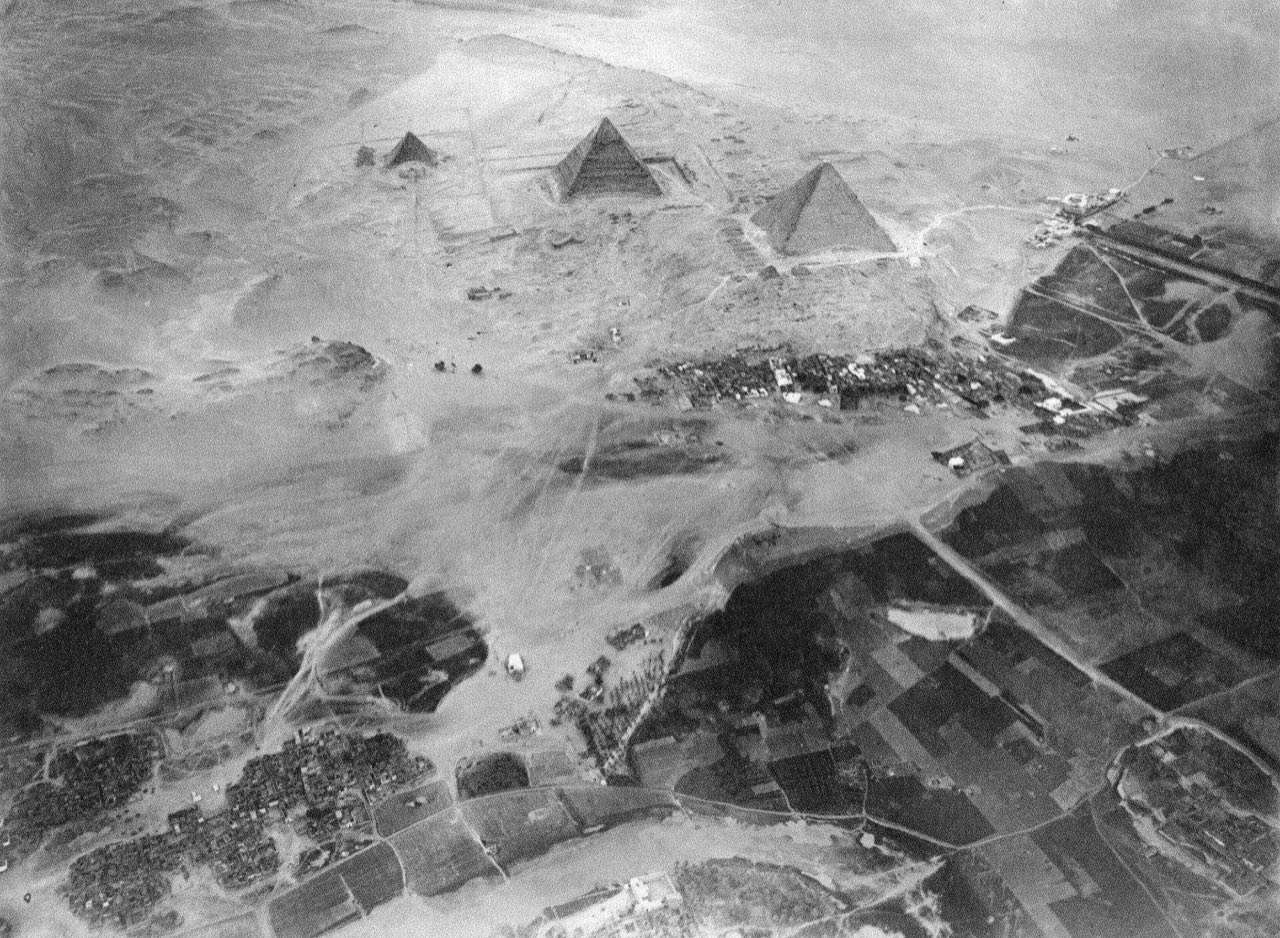
Aerial view of the Giza Pyramids at dusk, Egypt
Established 2009  ·  Cairo, Egypt

Discover Egypt's
Living Heritage

From the treasure-filled halls of the Grand Egyptian Museum to the silent grandeur of Luxor's Valley of the Kings, Egypt holds more layers of human history than any other nation on earth. Nile Heritage Consultants has spent fifteen years helping curious visitors move beyond the tourist queue and into genuine understanding — with curated itineraries, expert-led briefings, and on-the-ground knowledge that transforms a holiday into a lasting memory.

15+
Years of expertise
4,200+
Itineraries arranged
38
Sites covered
97%
Visitor satisfaction
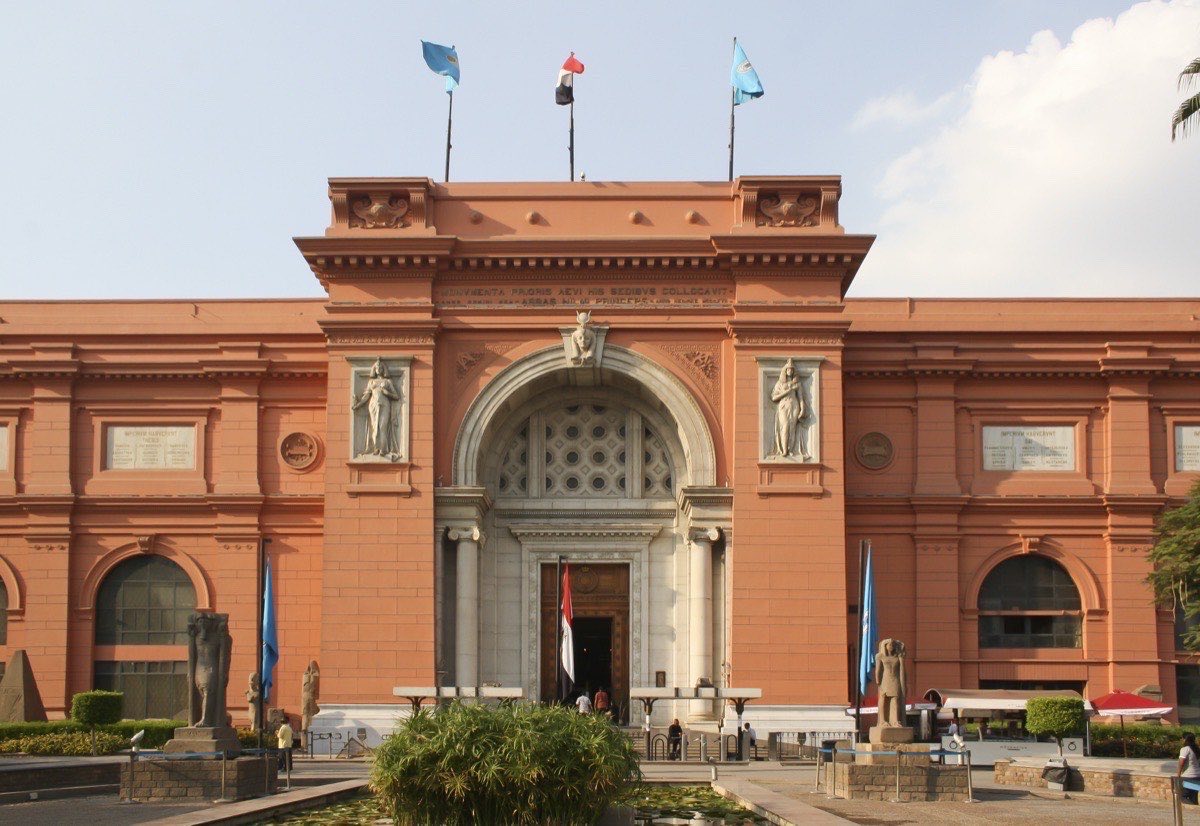
Facade of the Egyptian Museum on Tahrir Square, Cairo
Why Egypt Muse

Depth, context, and genuine connection to the past

Most visitors to Egypt see the surface: the pyramids at sunrise, the crowded corridors of the Cairo Museum, the sweeping light show at Karnak. That surface is extraordinary — but it is only the beginning. The artifacts stacked behind rope barriers, the inscriptions on columns that pass without explanation, the chronology that links a New Kingdom tomb to a Roman villa five kilometres away — these are the details that transform sightseeing into scholarship.

At Nile Heritage Consultants, our team of registered Egyptologists, licensed site guides, and cultural historians brings you that second layer. We consult with you before your trip to understand your interests — whether you are drawn to dynastic succession, religious symbolism, architectural technique, or daily life in ancient times — and we tailor every element of your programme accordingly.

  • Pre-trip orientation sessions with a specialist Egyptologist
  • Priority entry arrangements at major sites
  • Curated access to the Grand Egyptian Museum's restricted galleries
  • Privately arranged Nile cruises with academic commentary
  • Accommodation in historically significant hotels and heritage properties
Meet our team
Must-Visit Destinations

Six landmarks every Egypt traveller should know

These six sites together span nearly three thousand years of continuous civilisation. Each one rewards careful preparation — and repays repeat visits in different seasons and at different hours of the day.

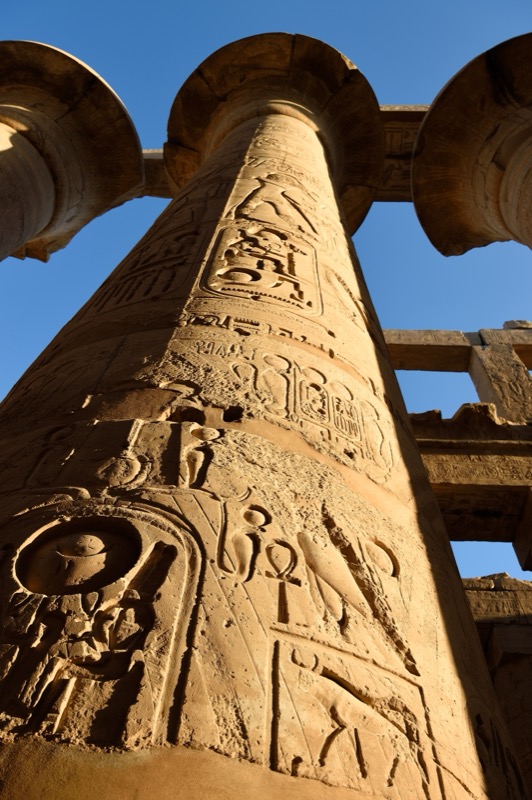
Towering columns of the Hypostyle Hall at Karnak Temple, Luxor
01

Karnak Temple Complex, Luxor

The largest religious structure ever built, Karnak's Hypostyle Hall alone contains 134 columns, each carved with hieroglyphic texts spanning the reigns of Seti I and Ramesses II. Plan at least three hours for the main precinct, and return at dusk for the sound-and-light programme that traces the pharaonic timeline across the Sacred Lake. Our guides provide chronological orientation before entry so the jumble of additions by different dynasties becomes a coherent narrative rather than an architectural riddle.

Explore Karnak guide
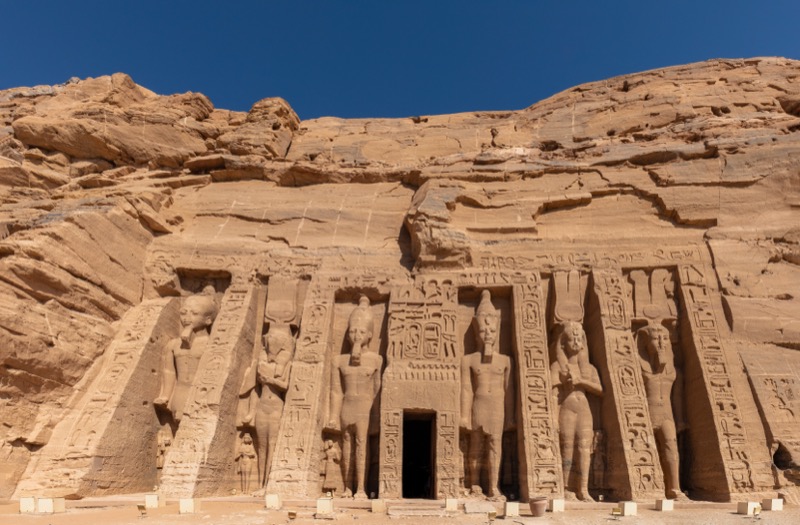
Great Temple of Nefertari at Abu Simbel in the Nubian desert
02

Abu Simbel, Nubia

Ramesses II commissioned two temples carved directly into the sandstone cliff at Abu Simbel around 1264 BCE. What most visitors do not know is that the entire complex was relocated 65 metres uphill between 1964 and 1968 to avoid submersion by Lake Nasser — an engineering feat that consumed ten years of international cooperation and remains one of UNESCO's most celebrated preservation projects. Twice a year, on 22 February and 22 October, the rising sun illuminates the inner sanctuary figures in a phenomenon the ancient architects deliberately engineered.

Abu Simbel details
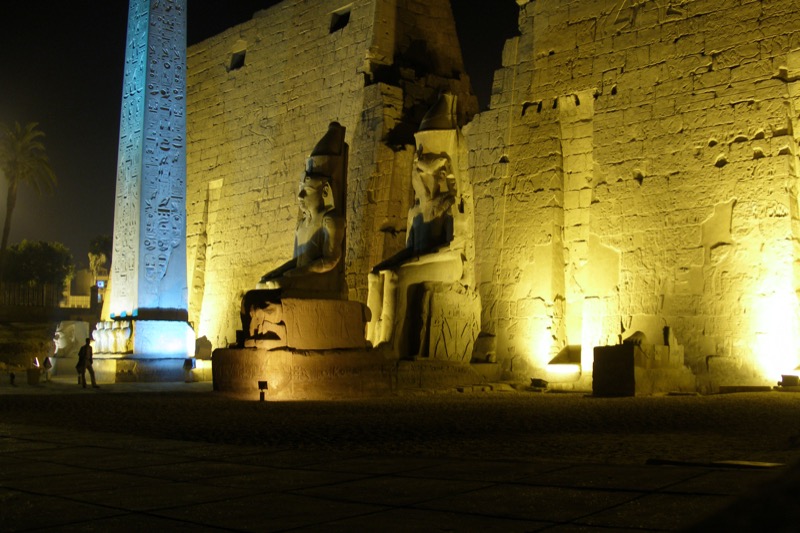
Luxor Temple illuminated at night along the Nile corniche
03

Luxor Temple, Upper Egypt

Built primarily by Amenhotep III and Ramesses II, Luxor Temple served as a site of religious renewal — the opet festival that reaffirmed the pharaoh's divine identity was celebrated here each year. The temple is unique in that four different civilisations built within its walls: ancient Egyptians, Alexander the Great, Roman soldiers who converted a chapel into a Christian church, and the medieval community who built the Mosque of Abu el-Haggag directly atop the ruins — the mosque remains operational today. Evening visits offer dramatically cooler temperatures and exceptional lighting.

Luxor Temple guide
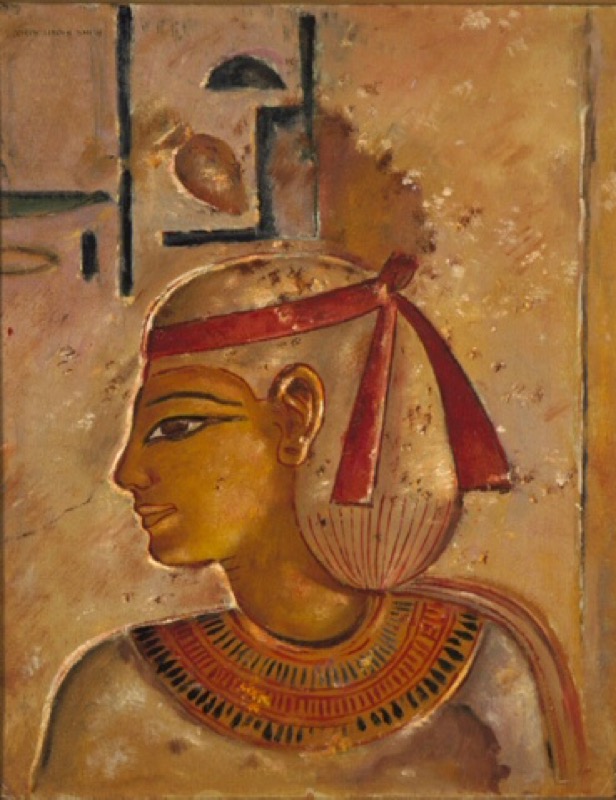
Wall relief from a royal tomb in the Valley of the Kings, Luxor
04

Valley of the Kings, West Bank

Sixty-three royal tombs cut into the limestone hills of the West Bank at Luxor contain some of the most detailed painted programmes in existence. Standard tickets grant access to three; specialist permits open chambers rarely seen by the public, including the Tomb of Sennedjem in Deir el-Medina, decorated by a master craftsman working on his own family's eternal home. Our scheduling accounts for the daily visitor cap, ensuring your entry falls during the quietest window — typically before 8 am or after 3 pm. We also arrange private viewing of the conservation work under way in KV17, tomb of Seti I, with a Getty Conservation Institute liaison.

Valley of the Kings
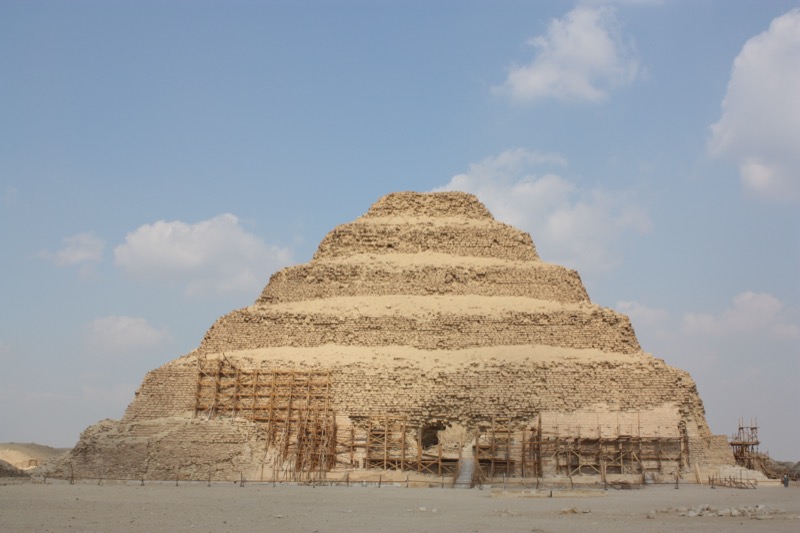
The Step Pyramid of Djoser rising above the desert at Saqqara
05

Saqqara Necropolis, Lower Egypt

Saqqara predates Giza by several centuries. The Step Pyramid of Djoser — designed by the architect Imhotep around 2667 BCE — represents the first large-scale stone construction in human history. The surrounding necropolis includes mastabas of high officials, a pyramid with the earliest surviving religious texts, and ongoing excavations that regularly reveal previously unknown burial chambers. The 2019–2022 excavation season unearthed over 250 sealed sarcophagi still containing mummified remains — some of the most significant archaeological finds in decades. We arrange visits to active dig sites when excavation permits allow, with direct commentary from the field team.

Saqqara explorer guide
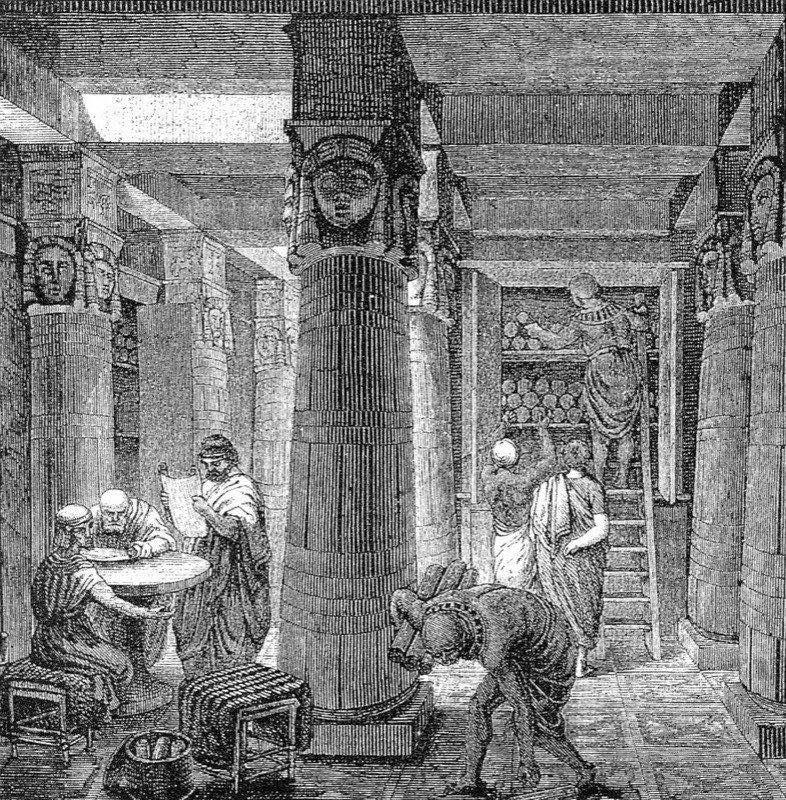
Interior of the Bibliotheca Alexandrina, the modern Great Library of Alexandria
06

Bibliotheca Alexandrina, Alexandria

The original Library of Alexandria held perhaps 400,000 scrolls and hosted scholars including Euclid, Archimedes, and Eratosthenes — who calculated the earth's circumference here in 240 BCE. The modern library, inaugurated in 2002, was designed by Snøhetta architects and includes the Antiquities Museum, the Manuscript Museum, a Planetarium, and the world's largest flat-screen projection. The city itself contains layers of Ptolemaic, Roman, medieval Arabic, and Ottoman history accessible on walking tours we organise in conjunction with the Alexandria Preservation Society. The half-day trip from Cairo by high-speed rail takes under two hours.

Alexandria day guide
How We Work

From first enquiry to final debrief

01  —  Initial Consultation

We begin with a 30-minute video or phone call to understand your interests, travel dates, group composition, and budget. This shapes every subsequent decision — there is no template itinerary we attempt to fit you into. A follow-up written summary confirms agreed priorities and outlines the next steps.

02  —  Research & Design

Our Egyptology team researches the most current access conditions, restoration closures, and seasonal considerations for every site you have expressed interest in. We cross-reference current permit availability, accommodation options within walking distance of key sites, and logistical connections between regions — all checked within 48 hours of your consultation.

03  —  Programme Delivery

You receive a detailed day-by-day programme with opening times, recommended arrival windows, annotated site maps, reading lists, and introductory video briefings recorded by the guide assigned to your visit. All booking confirmations, transport arrangements, and venue contacts are included in a single digital dossier.

04  —  On-the-Ground Support

During your visit, a Cairo-based point of contact is available via secure messaging throughout local business hours. For guided days, your Egyptologist meets you at the agreed location and remains with the group for the agreed duration. Real-time adjustments for weather, closures, or changed interests are handled by the team, not left to you.

05  —  Post-Visit Resources

Within two weeks of your return, you receive a personalised reference pack: high-resolution photographs of inscriptions and artefacts photographed during your visit, a bibliography curated to your specific interests, and a written summary of the historical narrative your guide covered — so that what you saw stays legible long after the details of travel have faded.

06  —  Ongoing Correspondence

Many of our clients return for a second or third visit as their knowledge deepens. We maintain a record of what each client has visited and studied, so return engagements build intelligently on previous experience rather than repeating it. We also send a quarterly newsletter covering new excavation findings, access changes, and forthcoming exhibitions at Egypt's major institutions.

4,200+
Programmes delivered
38
Sites in portfolio
61
Countries represented
15
Egyptologists on staff
From Our Visitors

What researchers and travellers say

"I have been to Egypt twice before with standard group tours, and honestly left each time feeling slightly overwhelmed and underinformed. The consultation before this third trip changed everything. Our guide spent two days walking us through the Theban Necropolis with a depth of contextual knowledge I have never encountered in any guided experience — in Egypt or elsewhere."

Dr. Miriam Alderton
Professor of Classical Studies, Bristol, UK

"The itinerary Nile Heritage designed for our family was extraordinary — appropriate for our twelve-year-old who wanted to focus on tomb paintings, and for my wife and me who were more interested in the agricultural and administrative history of the Old Kingdom. The guide navigated both without either of us feeling the visit had been compromised. The post-trip bibliography alone was worth the consultation fee."

Thomas Bergmann
Architect, Stuttgart, Germany

"We arranged a specialist itinerary focusing on Coptic Cairo and early Christian sites — a niche that most Egypt tourism providers completely overlook. From the Hanging Church in Old Cairo to the Monastery of Saint Macarius in the Western Desert, every site was opened with proper context and every guide we met was genuinely knowledgeable about the theological as well as architectural significance of what we were seeing."

Sister Benedikta Varos
Religious scholar, Vienna, Austria
Ready to Begin?

Start planning your Egypt programme today

Every visit is different. Tell us what draws you — the temples, the tombs, the archaeology, the cuisine, the Nile — and we will build an itinerary around your specific interests. No generic packages. No one-size tours.